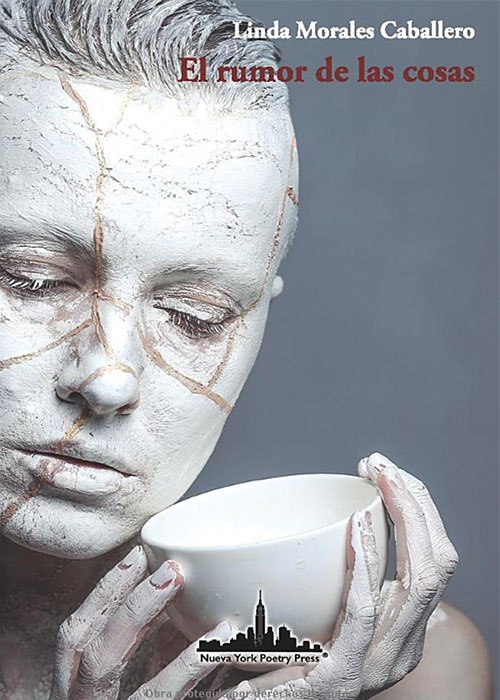
The first section of this enigmatic book is entitled “Kintsugi,” translated by its author, Linda Morales Caballero, as “the beauty of scars.” And that it is; but it is something else as well. The Japanese word (金継ぎ), composed of kin (gold or golden) and tsugi (to repair) refers to the art of repairing or suturing broken objects: ceramic bowls, for example, with gold liquid. As each object breaks differently, the golden sutures take on a special beauty, and in the end what is on display, as the author rightly says, is “the beauty of the scars.”

“13 short pieces…pungently convey the effects of growing up under a totalitarian regime.” .—Publishers Weekly
A new book of poems by Nina Kossman. “When the mythological and personal meet, something transforms for this reader…” —Ilya Kaminsky
Original poetry by Nina Kossman, accompanied by a selection of poems by Marina Tsvetaeva, translated from Russian by Kossman. “The sea is a postcard,” writes Nina Kossman. There is both something elemental in this vision and—iron-tough.”
—Ilya Kaminsky
A collection of nonsense poetry for readers who love Edward Lear, Hilaire Belloc, and all things delightfully peculiar.
A haunting dystopia some readers have called “the new 1984.” In a society where memory is rewritten and resistance is pre-approved, freedom isn’t restricted; it’s redefined. As systems evolve beyond human control and choice becomes a simulation, true defiance means refusing the script, even when the system already knows you will.
A hybrid scholarly and literary volume of popular Russian-language Soviet children’s texts alongside essays that outline the significance and meanings behind these popular texts.